
FET, or Federal Excise Tax, is tax on larger tires. This document will review how FET is handled in HITS.
FET is a field in the HITS inventory file. When adding/editing products in HITS, the FET amount will need to be added for the item. If using the catalog or integration to add products, FET will be added for the item.
How FET is factored into Cost:
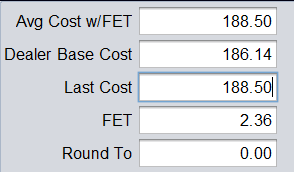
Avergae Cost: Includes FET
Last Cost : Includes FET
Dealer Based Cost** : Does NOT include FET
**Since Dealer Based Cost is a “manual cost”, some companies prefer to include FET in Dealer Based Cost. (Currently EPP is calculated assuming Dealer Base Cost does NOT include FET).
How FET is factored into Price:
When performing price updates, Price Code 1-4 should NOT include FET. HITS will add FET to Price 1-4 both in the point-of-sale and online when calculating the customer’s price. In the example below, if these were the prices updated in inventory, the customer’s price (calculated by HITS) will be $202.36.
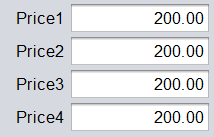
If using price updating routines in HITS to update your static Price 1-4 pricing, the system will calculate prices by removing FET (when applicable) out of Cost prior to calculating Price 1-4.
How FET shows on sales tickets
When invoicing, the Unit Price will NOT include FET. Unit FET shows on screen but is not editable for stocking parts (is editable for outside parts). The Amount (the full line amount) will include FET.

Sales Tax on FET/ Customer Exemptions
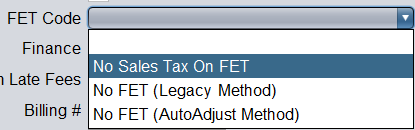
By default, sales tax is charged on FET, however in the customer’s file, you exempt a customer from Sales Tax on FET, or FET altogether.
How FET shows on Receiving Ticket
When receiving, the Unit Price w/ FET includes FET. Unit FET shows on screen but is not editable for stocking parts (is editable for outside parts). The Amount (the full line amount) will include FET.
